Millstones
Millstones
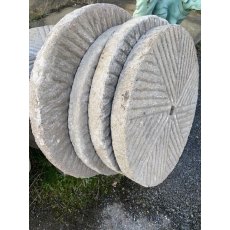
Millstones have been in use since well before biblical times. The wheels were made of various types of stone, both soft and hard, and in different sizes and thickness. The thicker ones were used on their edge to do the crushing; these can be up to a foot thick.
Millstones were often made in pairs. Used in the horizontal plain, the bottom stone (or bedstone) was stationary and slightly convex. Above this the ‘runner’ stone, slightly concave, turned and crushed the grain. The shape of the two stone forced the ground flour out to the edge where it was gathered up.
Millstones were generally turned by wind or by water power. However, the thicker mill stones of 300mm thick were often turned by a horse or bullock, on an axel, perpendicular to the ground, around a stone circular trench.
Some wheels were used for crushing corn while others were used for crushing fruit and others for making paper and cardboard, though the latter two items came later in the trade of milling.
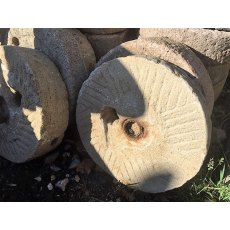
The very small mill stones (300mm to 600mm) that we have in the yard here at Wells Reclamation were used in domestic situations whereby they were turned by hand. You will see a 30mm hole on the surface of these smaller wheels where the miller moved the stone in a circular motion with one stone turning on top of another.
It is difficult to date mill wheels, they can be of any age simply because they erode very little. We have one here at Wells Reclamation which we feel is at least Anglo Saxon or even Roman as it was found about two metres under the soil in a field where its weight had taken it to that depth over the centuries.
When you examine a mill stone, best to do it with some respect, some can be older than Julius Caesar.
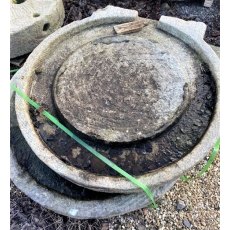
We have about a hundred millstones at Wells Reclamation of various sizes up to nearly three metres across. They have lots of uses from making garden tables to placing them into patios. Some smaller ones look attractive in the middle of rustic internal kitchen stone floors.
When carved with the house or farm name they make a very good 'Name Plate.' Old mill houses or disused mills definitely deserve one!

View Basket